
Tales of Bhutan
The Little Red Chilli That Became Bhutan
Few ingredients tell the story of Bhutan quite like the humble chilli.
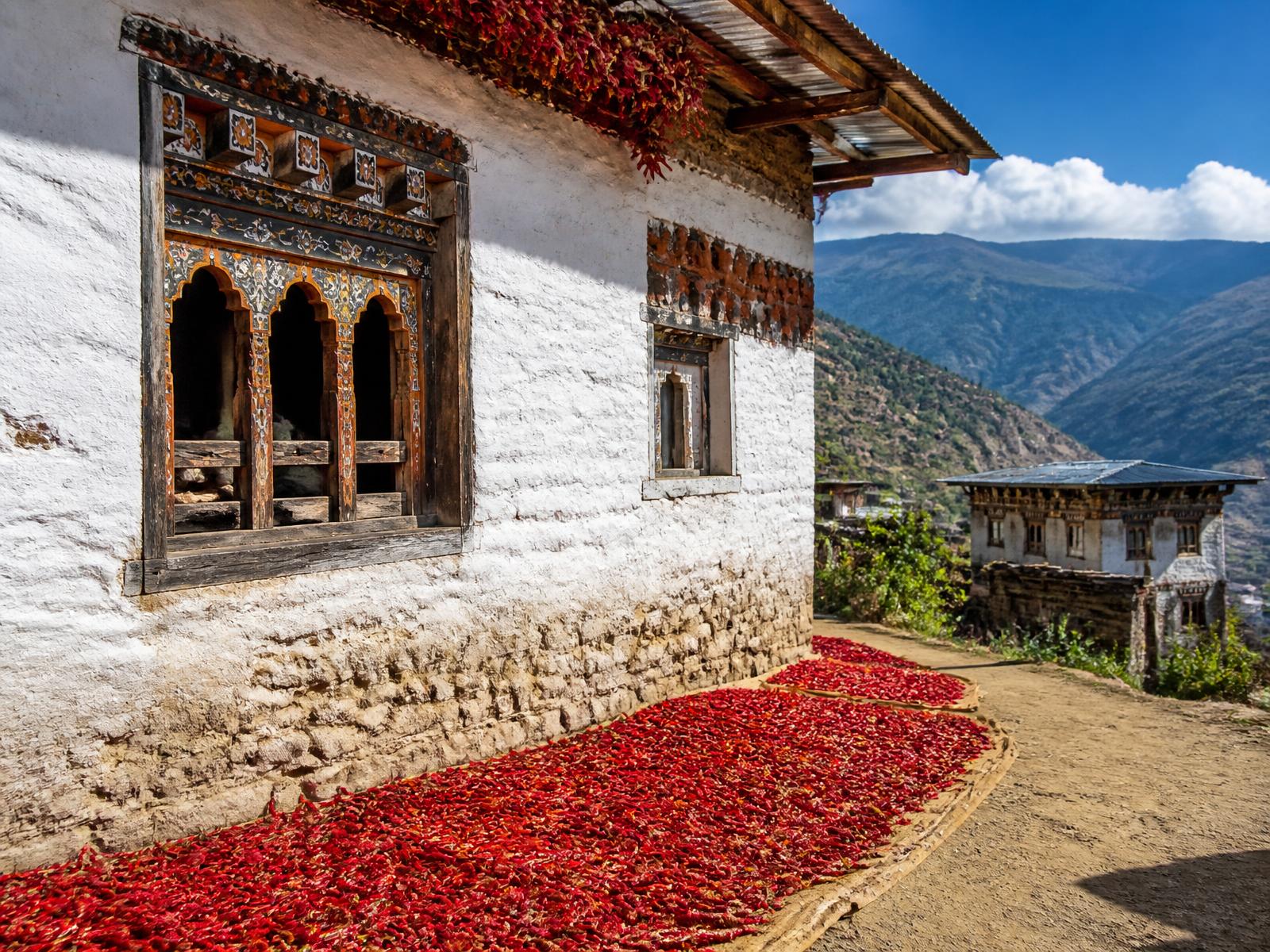
Today, it is difficult to imagine Bhutanese food without chilli. A bowl of ema datshi, a plate of red rice, or a simple meal shared around a family table often feels incomplete without its familiar heat. For Bhutanese people, chilli is more than a spice, it has become a taste of home.
Yet, surprisingly, the chilli is not originally from Bhutan.
A Journey Across the World
The chilli (Capsicum) is a New World crop, native to the Americas, particularly regions of present-day Mexico and Central and South America. Indigenous peoples had cultivated and eaten chillies for thousands of years before Europeans ever encountered them.
It was only after the voyages of Christopher Columbus in the late 15th century that chillies began their remarkable journey across the globe. Carried through European maritime and trading networks, particularly those of the Portuguese and Spanish, the fiery fruit travelled from the Americas to Europe and eventually to Africa and Asia.
By the 16th century, chilli had reached the Indian subcontinent, where it quickly found a place in local agriculture and cuisine. From there, it is likely that the plant continued its journey northwards through the many trading and cultural routes connecting the Indian plains with the Himalayan kingdoms.
One possible journey of the chilli to Bhutan therefore looks something like this:
The Americas → Europe → India → Himalayan trade routes → Bhutan
But the exact story of how the chilli first arrived in Bhutan remains uncertain.
A Stranger Becomes Part of Home
Historical records suggest that chilli was already known in the Himalayan region by the 17th century. Bhutanese historical sources, however, provide only limited evidence about precisely when, and through whom, it first entered the country.
What we do know is that by the 18th century, chilli was already familiar enough to have found its way into Bhutanese food culture.
When the British traveller George Bogle visited Bhutan in the 1770s, he described a Bhutanese dish known as gegaw as being seasoned with red peppers. His account offers a fascinating glimpse into a time when chilli was already being enjoyed at the Bhutanese court.
In other words, while chilli may have arrived in Bhutan as a foreign crop, it did not remain foreign for long.
Over generations, Bhutanese people adopted it, cultivated it, cooked with it and, eventually, made it their own.
Before the Chilli, There Was Heat
The story becomes even more interesting when we remember that Bhutanese cuisine was not without pungency before the arrival of Capsicum.
Traditional accounts mention a local herb known as namda, which was used to provide food with a hot and pungent flavour. This suggests that the Bhutanese palate already appreciated bold and warming flavours.
Perhaps, then, chilli found a welcoming home in Bhutan.
What began as an introduced plant gradually became the preferred source of heat in everyday cooking. Its flavour fitted naturally into Bhutanese food traditions, while its ability to grow in the country's varied agricultural landscapes allowed it to become increasingly familiar.
From Imported Spice to Bhutanese Staple
There is another fascinating part of the story.
Although chilli has been deeply embedded in Bhutanese cuisine for centuries, domestic chilli cultivation on a large scale is relatively recent. For much of Bhutan's history, the country relied significantly on imported chillies to satisfy its appetite for the fiery ingredient.
This creates a wonderful paradox: Bhutanese people have loved chilli for centuries, even though Bhutan did not always produce enough of it itself.
Like potatoes, maize and many other crops that travelled across continents, chilli eventually crossed the boundary between foreign and familiar. Its origins may lie thousands of kilometres away in the Americas, but its cultural home today feels unmistakably Bhutanese.
So, Was Ema Datshi Always Made with Chilli?
Probably not in the form we know today.
Because chilli itself is not indigenous to Bhutan, the earliest versions of Bhutanese dishes could not have used Capsicum. The exact history of dishes such as ema datshi is difficult to reconstruct, and there is no simple historical record telling us exactly when the modern dish emerged.
What we can say is that chilli has been part of Bhutanese food culture for several centuries, and over that time it became deeply woven into the country's culinary identity.
Today, ema datshi is almost synonymous with Bhutanese cuisine. The combination of chilli and cheese may seem ancient and timeless, but its principal ingredient has a much longer journey behind it - one that began across the oceans in the Americas and eventually found its way into the kitchens and fields of the Himalayas.
A Taste of Bhutan
Perhaps that is what makes the chilli's story so beautiful.
It reminds us that food traditions are not always born in one place. They travel with people. They cross mountains and borders, move along trade routes, enter new kitchens and are transformed by the people who embrace them.
The chilli travelled from the Americas to Asia, from the plains to the Himalayas, and from an unfamiliar crop to a symbol of Bhutanese food.
Today, when a bowl of ema datshi arrives at the table, few would think of the long journey behind that little red pepper.
But every bite carries a piece of that story.
A crop from the New World became a flavour of the Himalayan kingdom - and eventually, a taste of Bhutan itself.